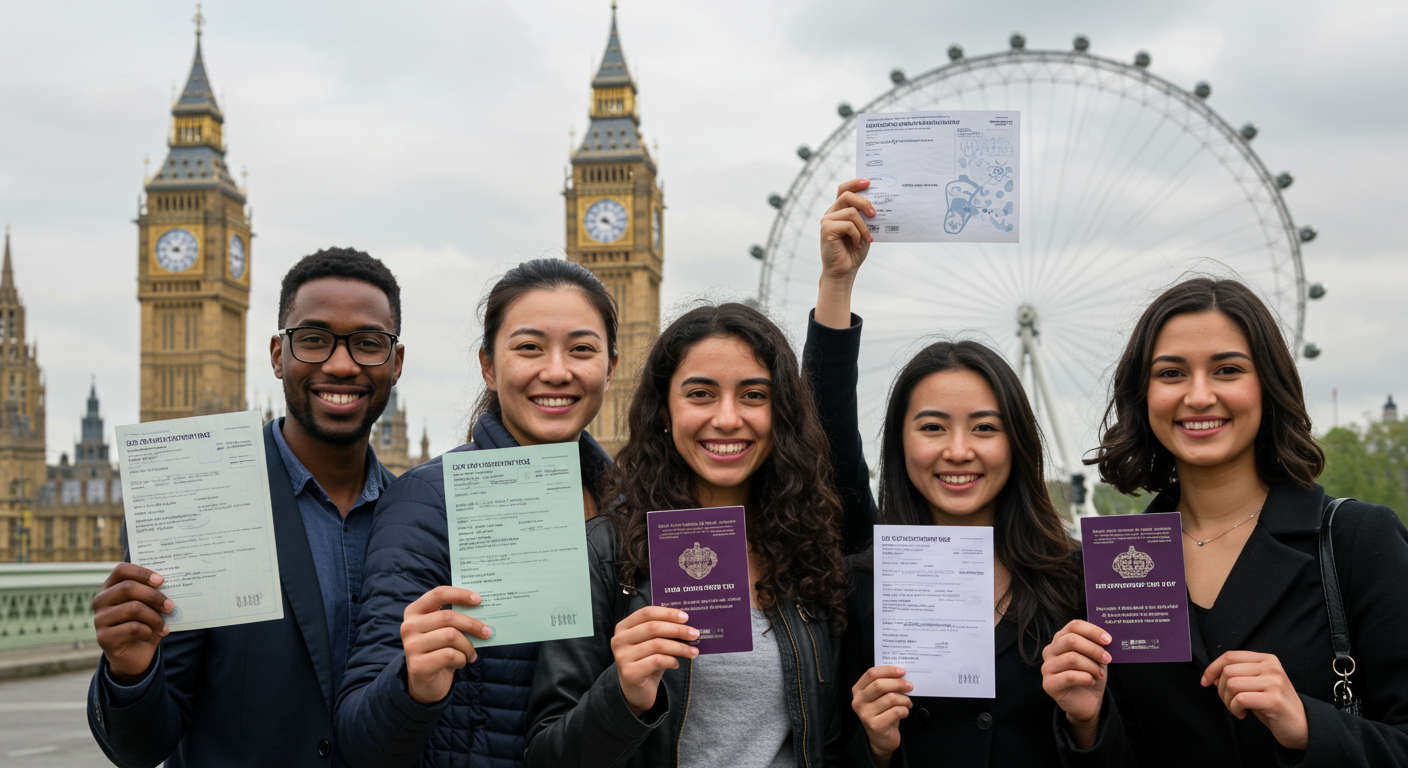
Every year, thousands of Nigerians require Proof of Fund (POF) for different purposes — from studying abroad, securing immigration visas, to winning business contracts and tenders.
In all these cases, you must provide verifiable financial evidence that you have the required funds. But the process can be stressful, confusing, and time-sensitive.
That's where POF NG comes in. We provide legitimate, verifiable Proof of Fund and investment certificate documents tailored to your specific needs:
You’ve spent months, maybe even years, preparing for this moment. You’ve secured admission to your dream university abroad, practiced for the interview, and gathered all your documents.
But there’s one small detail that could bring it all crashing down: your choice of bank for the Proof of Funds (POF).

Many applicants, in a bid to save on costs or for convenience, turn to microfinance banks. Unfortunately, this can be a critical mistake that puts your entire study abroad journey at risk.
"I was so stressed about my UK student visa because my bank statement wasn't ready. I thought my Japa dreams were over for the year. I reached out for proof of funds assistance, and within 48 hours, my financial documents were perfectly structured. My visa was approved last month, and I'm now studying in London! If you're struggling, don't give up—get the right help." — Chidi A., Lagos
The wrong bank statement can raise immediate red flags for a visa officer, leading to tough questions and, ultimately, a rejection that could have been avoided.
Using microfinance banks for your Proof of Funds is highly risky because embassies and visa officers often view them as less stable, difficult to verify internationally, and their financial statements may not meet the strict, standardized requirements for visa applications. This skepticism can lead to doubts about the authenticity and accessibility of your funds, resulting in a visa denial.
What Exactly Are Microfinance Banks?
Before we dive into the risks, it’s important to understand what microfinance banks are. Unlike commercial banks, their primary goal is to provide financial services—such as small loans (microcredit), savings, and insurance—to low-income individuals, small businesses, and those in rural areas who may not have access to traditional commercial banks.
While they play a vital role in promoting financial inclusion, their operational scale, regulatory framework, and international recognition are vastly different from major commercial banks. This difference is precisely where the problem lies for visa applicants.
The Red Flags: Why Visa Officers Distrust Microfinance Bank Statements
When a visa officer reviews your application, their main goal is to confirm that you are a genuine student with sufficient, stable, and legitimate funds to support yourself. A statement from a microfinance bank can raise several red flags.
1. Difficulty in Verification
Embassies have established verification channels with major commercial banks. They can quickly and easily confirm the authenticity of a statement or the balance in an account.
Microfinance banks, especially smaller ones, are often not on their radar. This makes it difficult, if not impossible, for the embassy to verify your funds, and any document that cannot be verified is often treated as invalid.
2. Non-Standard Statements and Practices
International visa applications require bank statements in a specific format, detailing transaction history, account holder information, and official bank contact details. Microfinance bank statements can sometimes be less detailed or appear unprofessional, raising doubts about their legitimacy.
The lack of a robust, long-term banking history can make a large, recent deposit for POF look like temporary “fund parking,” a major reason for visa denials.
3. Perceived Financial Instability
Rightly or wrongly, visa officers may perceive smaller financial institutions as less stable than large, national commercial banks. They might question whether the funds will truly be available to you once you are in their country.
They need assurance that your financial backing is solid, and a statement from a large, reputable bank provides that peace of mind. org), relies on the stability of larger banking institutions.
4. Concerns During the Visa Interview
” If the bank is a small microfinance institution, it can lead to uncomfortable follow-up questions about the source of your funds and your financial history. An unsatisfactory answer can destroy your credibility.
Chat us Via Whatsapp to Get up to ₦500 million Proof of fund Today.
Whether you are applying for studentship, business deals, contracts, student visas, and immigration, we can fund you.
Safer Alternatives for a Rock-Solid Proof of Funds
So, what should you do instead? The key is to use financial instruments and institutions that are universally recognized and trusted.
Here are the best options:
Reputable Commercial Banks
This is the gold standard. Using well-known banks like Globus, Fidelity, FCMB, Stanbic, First Bank, or UBA ensures your documents are professional, verifiable, and immediately accepted.
Their statements meet international requirements set by embassies like those of the UK and Canada, which have very specific financial evidence rules. You can learn more about why visa applications get rejected because of POF to better prepare.
Fixed Deposits and Investment Statements
Showing funds in a fixed deposit or investment portfolio from a recognized financial institution demonstrates long-term financial stability. It proves the money isn’t just a temporary loan but part of your family’s established assets.
Immigration forums frequently highlight this as a strong proof point.
Verified Third-Party POF Services
Sometimes, gathering the full amount in a personal account isn’t feasible. This is where a trusted service like Proof of Fund NG comes in.
We connect you with **licensed finance companies and reputable financial partners**—not microfinance banks—to provide authentic, verifiable bank statements and confirmation letters that meet embassy standards. Our process is secure, transparent, and designed to pass verification smoothly.
Practical Tips to Avoid a POF-Related Rejection
- Start Early: Don’t wait until the last minute. Ensure your funds have been in a compliant account for the required duration (often 28 days or more, as per UK Visas and Immigration rules).
- Choose the Right Bank: Stick to major, well-established commercial banks. Avoid microfinance, mortgage, or smaller cooperative banks for your POF.
- Keep Records: Be prepared to explain the source of any large deposits. Documents like property sales agreements, gift deeds, or investment liquidation statements are crucial.
- Consult an Expert: If you are unsure about any part of the process, it’s better to seek professional guidance than to risk a refusal. The work of institutions like the World Bank shows how complex global finance can be.
Don’t Let Your Bank Choice End Your Dream
Your dream of studying abroad is too important to leave to chance. While microfinance banks serve a valuable purpose in our local economy, they are simply not the right tool for an international visa application.
The risks of scrutiny, verification issues, and outright rejection are far too high.
By choosing a reputable commercial bank or working with a trusted agent like Proof of Fund NG, you present a strong, credible financial profile that gives visa officers the confidence to approve your application. Make the smart choice to secure your future.
Are you ready to get an embassy-compliant Proof of Funds without the stress? Contact Proof of Fund NG today for a free consultation.
We’ll connect you with reliable financial partners to ensure your visa application is built on a solid foundation. Contact Proof of Fund NG to get started!
Prefer an in-person meeting? You can also visit us at our office: 161C Raufu Taylor Close, Off Idejo Street, Victoria Island, Lagos.
Can I use Opay as proof of funds?
No, you should not use OPay as proof of funds for major international visas. While OPay is a fantastic digital wallet for daily transactions in Nigeria, embassies like the IRCC and UKVI require statements from traditional, Tier-1 commercial banks. Digital wallets often face international verification challenges.
Does the embassy accept an OPay bank statement?
Generally, embassies do not accept OPay bank statements for student or work visas because OPay operates as a mobile money operator rather than a traditional commercial bank. Always use a recognized commercial bank like Zenith, Globus, or Parallex for your visa application.

Victoria Ajetomobi
Victoria is an expert study abroad and visa consultant with years of experience helping Nigerian students and professionals navigate complex proof of funds requirements.
Chat with Victoria